
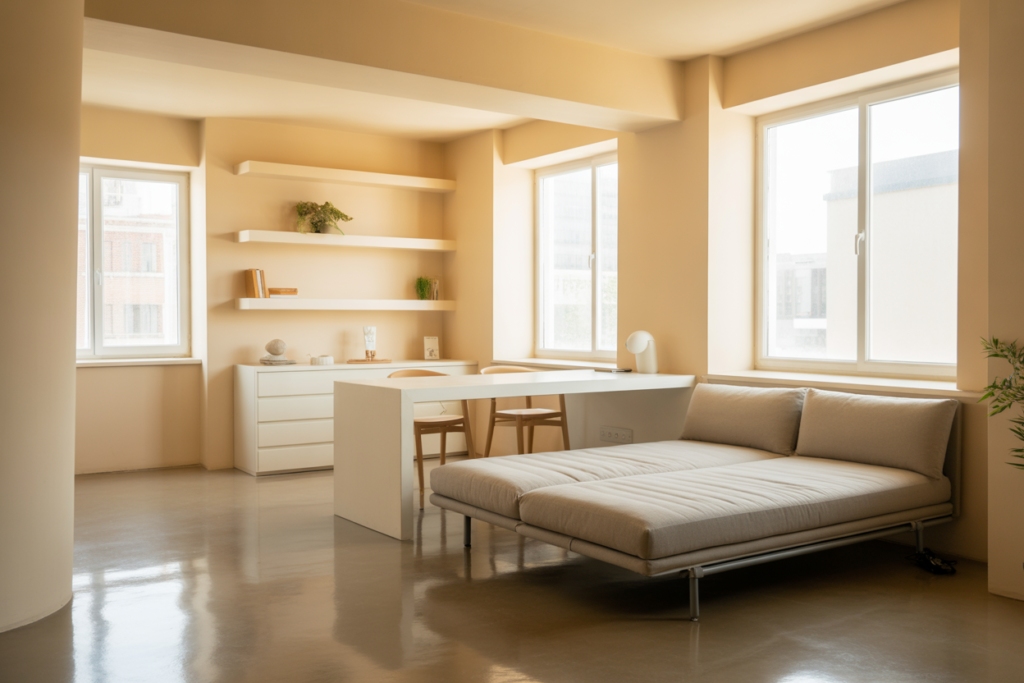
Decorating small spaces without clutter is no longer just a design preference, it is a lifestyle shift. In homes where every square foot matters, the way you decorate directly affects how calm, functional, and beautiful your space feels. This guide will show you how to decorate with intention so your home feels open, stylish, and effortlessly livable without sacrificing personality.
Table of Contents
Table of Contents
Why Decorating Small Spaces Without Clutter Is Perfect for 2025
Decorating small spaces without clutter aligns perfectly with 2025 interior design trends because modern living is moving toward simplicity, flexibility, and mental clarity. With more people working from home, downsizing, or living in apartments and townhomes, homes must work harder without feeling overwhelming. Clean layouts, intentional furniture choices, and breathable design are replacing heavy décor and crowded rooms.
Sustainability also plays a big role in 2025. Homeowners are buying fewer but better pieces, choosing quality over quantity, and prioritizing longevity. Decorating small spaces without clutter supports this mindset by encouraging thoughtful purchases and multifunctional solutions. The result is a home that looks refined, feels calm, and adapts easily to daily life.
Top Benefits of Decorating Small Spaces Without Clutter
Creates the Illusion of More Space
When visual noise is reduced, rooms immediately feel larger. Clear surfaces, defined zones, and open sightlines allow the eye to move freely, which makes even the smallest room feel more expansive. A clutter-free approach helps ceilings feel higher and walls feel farther apart.
Improves Daily Functionality
Decorating small spaces without clutter makes everyday routines smoother. When each item has a purpose and a place, you spend less time searching for things and more time enjoying your home. This is especially important in kitchens, entryways, and bedrooms where functionality impacts daily flow.
Reduces Stress and Mental Fatigue
A cluttered environment creates constant visual stimulation, which can lead to stress and distraction. A thoughtfully decorated small space promotes calm and focus. Many homeowners notice better sleep, improved productivity, and a stronger sense of control when their spaces feel organized and intentional.
Makes Decorating More Affordable
When you decorate with restraint, you avoid impulse purchases. Decorating small spaces without clutter allows you to invest in fewer, higher-quality pieces that elevate your home instead of filling it. Over time, this approach saves money while improving design impact.
Designer Pick: My Personal Recommendation
As an interior designer, the most common mistake I see in small homes is overdecorating walls and surfaces too quickly. I always recommend starting with layout and storage before adding décor. If your furniture placement does not support movement and function, no amount of styling will fix it.
My personal rule is this, every decorative item must either serve a function, create visual balance, or add emotional value. If it does not do at least one of those things, it does not belong. Decorating small spaces without clutter is about editing, not eliminating personality.
Comparison Table: Decorating Approaches for Small Spaces
| Approach | Cost Range | Durability | Style Impact | Best For |
|---|---|---|---|---|
| Minimalist Styling | Low to Medium | High | Clean and modern | Apartments and studios |
| Multifunctional Furniture | Medium to High | Very High | Practical and polished | Small family homes |
| Maximalist Lite | Medium | Medium | Expressive but controlled | Creative personalities |
Step-by-Step Guide to Decorating Small Spaces Without Clutter
- Measure your space and map out walking paths before buying anything.
- Choose furniture that fits the scale of the room and avoids bulky silhouettes.
- Limit your color palette to two main tones and one accent color.
- Use vertical storage like wall shelves or tall cabinets instead of floor units.
- Keep surfaces mostly clear, styling only with intentional groupings.
- Choose closed storage for everyday items and open storage for display pieces.
- Edit décor seasonally to avoid accumulation over time.
Designer Tips to Elevate Decorating Small Spaces Without Clutter
Layer lighting instead of adding décor. Floor lamps, sconces, and warm bulbs add atmosphere without taking up visual space. Use mirrors strategically to reflect light and visually double the room. In 2025, soft textures like boucle, linen, and light wood tones are trending because they add warmth without heaviness.
Hidden storage is another major trend. Furniture with concealed compartments keeps spaces visually calm while remaining highly functional. Decorating small spaces without clutter works best when storage solutions blend seamlessly into the design.
7 Trending Designs in 2025 for Decorating Small Spaces Without Clutter
Soft Minimalism Living Rooms
Soft minimalism is taking over in 2025, especially for small living rooms. Instead of cold or empty spaces, this style leans into warm neutrals, low-profile furniture, and gentle textures that feel comfortable and lived-in. Think soft beige walls, a cozy sofa that sits low to the ground, and simple wood accents that add warmth without visual weight. The key here is restraint. Every item earns its place, which helps the room feel calm and open rather than sparse or boring. This approach works beautifully when decorating small spaces without clutter because it allows the room to breathe while still feeling welcoming.
Estimated Cost: $800 to $2,500
Multifunctional Statement Furniture
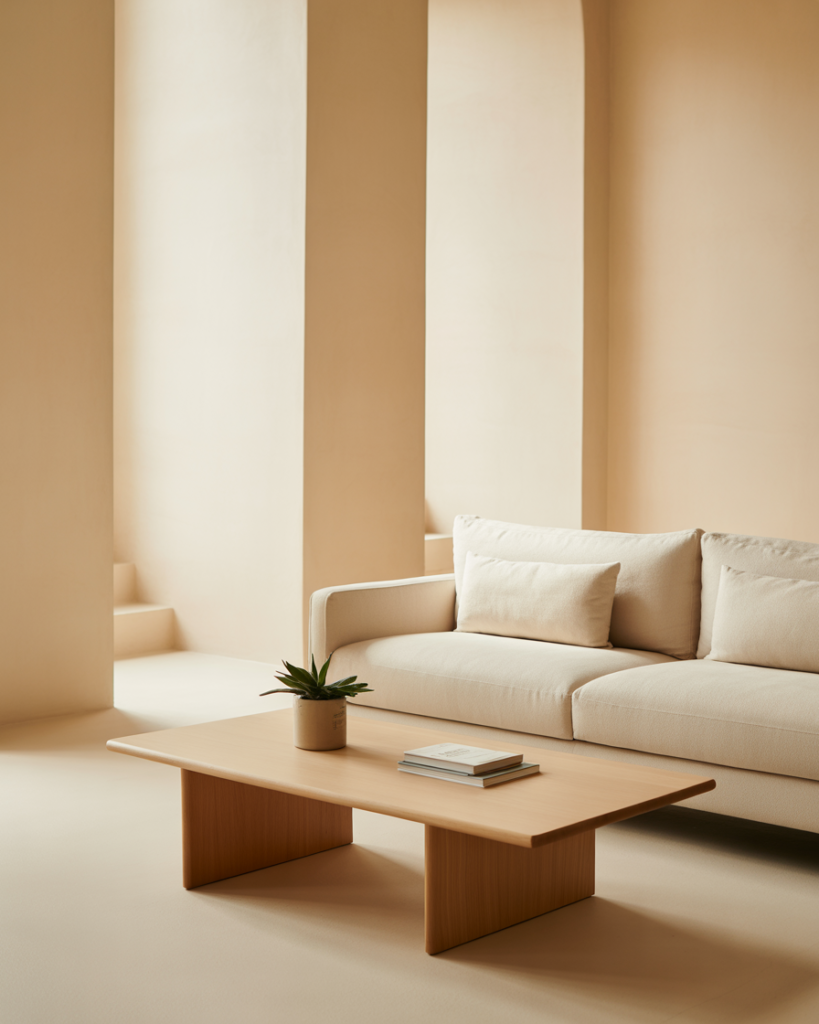
In small homes, furniture needs to work harder, and in 2025, multifunctional pieces are becoming true design statements. Instead of filling a room with multiple items, homeowners are choosing one well-designed piece that serves two or even three purposes. A sofa with hidden storage, a bed with built-in drawers, or an ottoman that doubles as seating and storage instantly reduces clutter. These pieces help keep everyday items out of sight, which is essential when decorating small spaces without clutter. The bonus is that modern designs no longer look bulky or utilitarian. They are sleek, stylish, and intentional.
Estimated Cost: $1,200 to $3,500
Floating Storage Systems
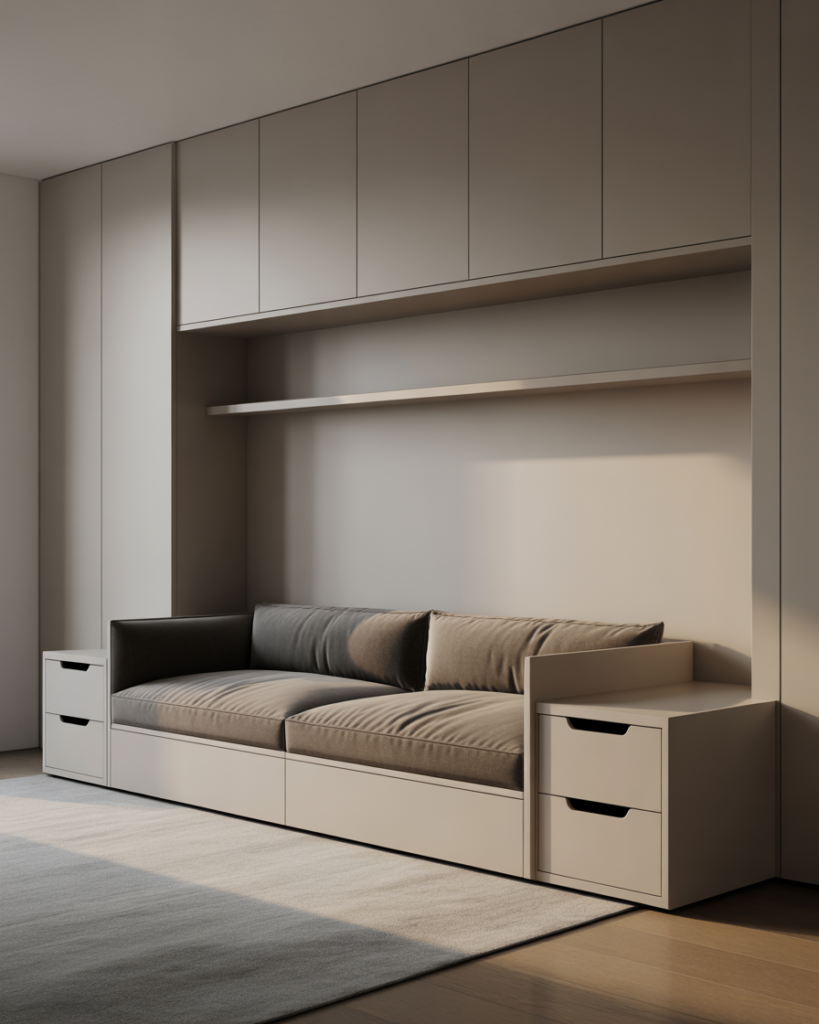
Floating storage continues to be a favorite for small spaces in 2025, and for good reason. Wall-mounted shelves and cabinets free up valuable floor space and keep rooms feeling light and open. When styled thoughtfully, floating storage provides function without visual chaos. A few carefully chosen decor pieces, some closed storage, and plenty of negative space make these systems feel clean and modern. This trend is especially effective in living rooms, kitchens, and home offices where clutter can build up quickly if storage is not handled properly.
Estimated Cost: $300 to $1,200
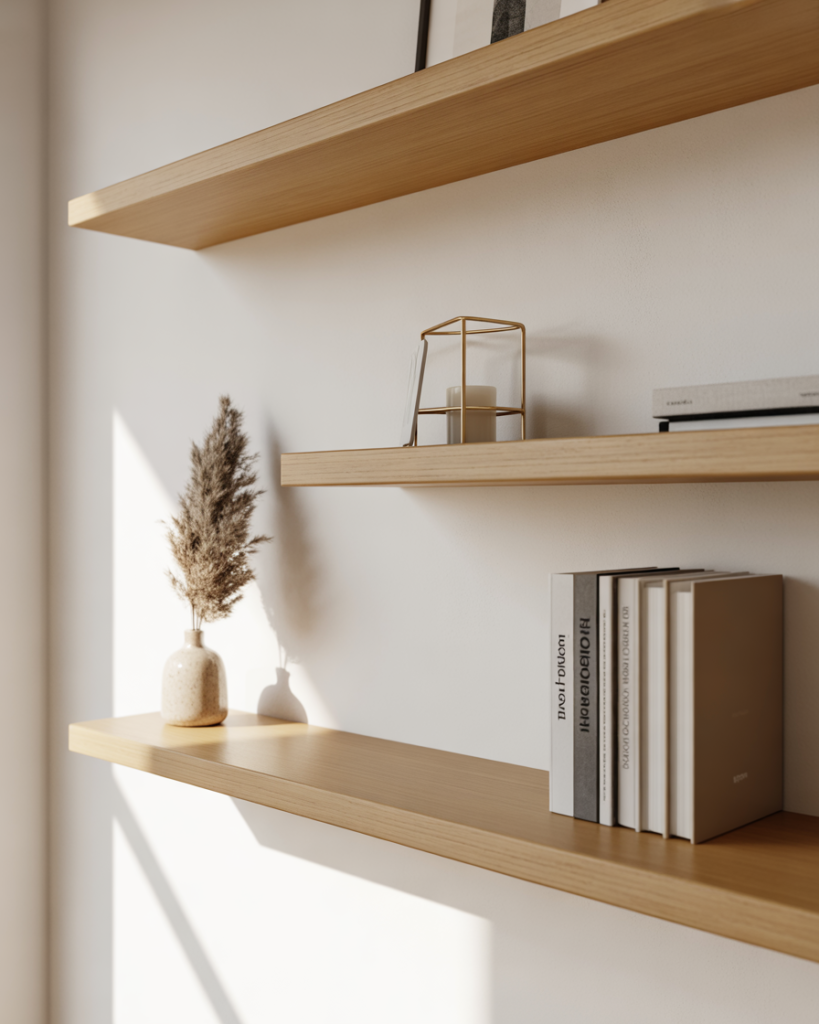
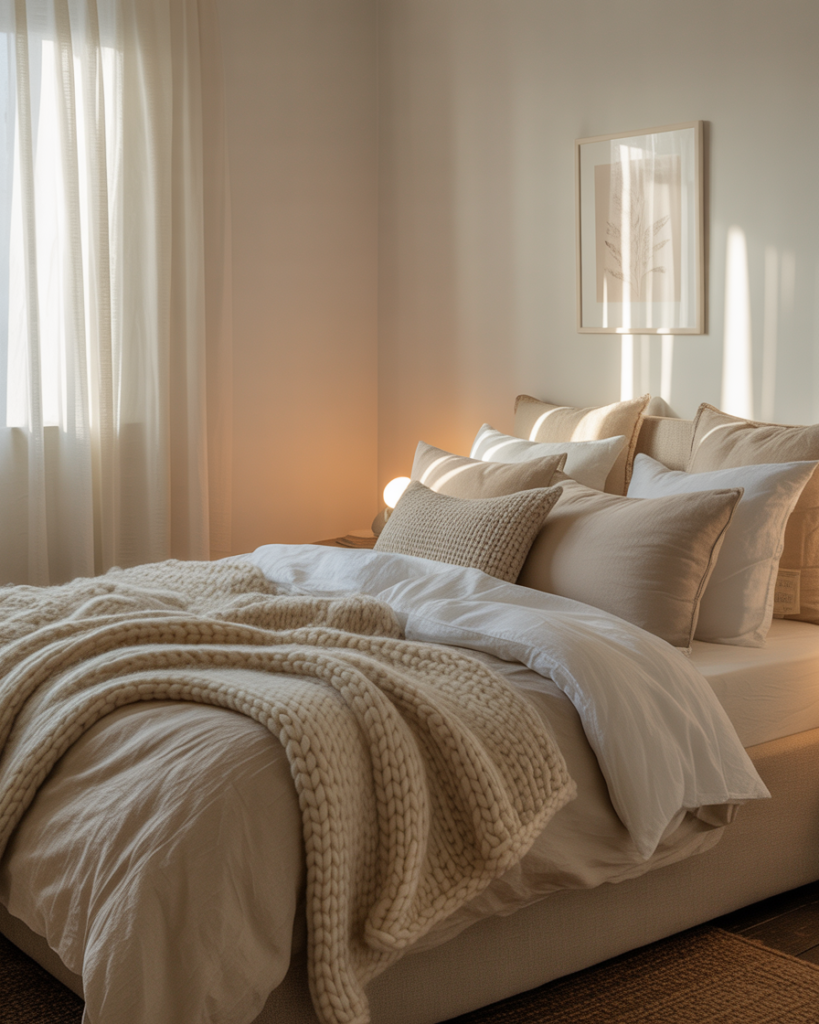
Neutral Layered Bedrooms
Bedrooms are becoming calmer and more intentional in 2025, especially in smaller homes. Neutral layered bedrooms focus on using similar tones to create depth without visual overload. Soft whites, warm taupes, and gentle grays are layered through bedding, rugs, and curtains to create a soothing environment. Instead of multiple decor items, the room relies on texture and subtle contrast. This approach supports better rest while also keeping the space uncluttered and visually peaceful, which is exactly what a small bedroom needs.
Estimated Cost: $600 to $2,000
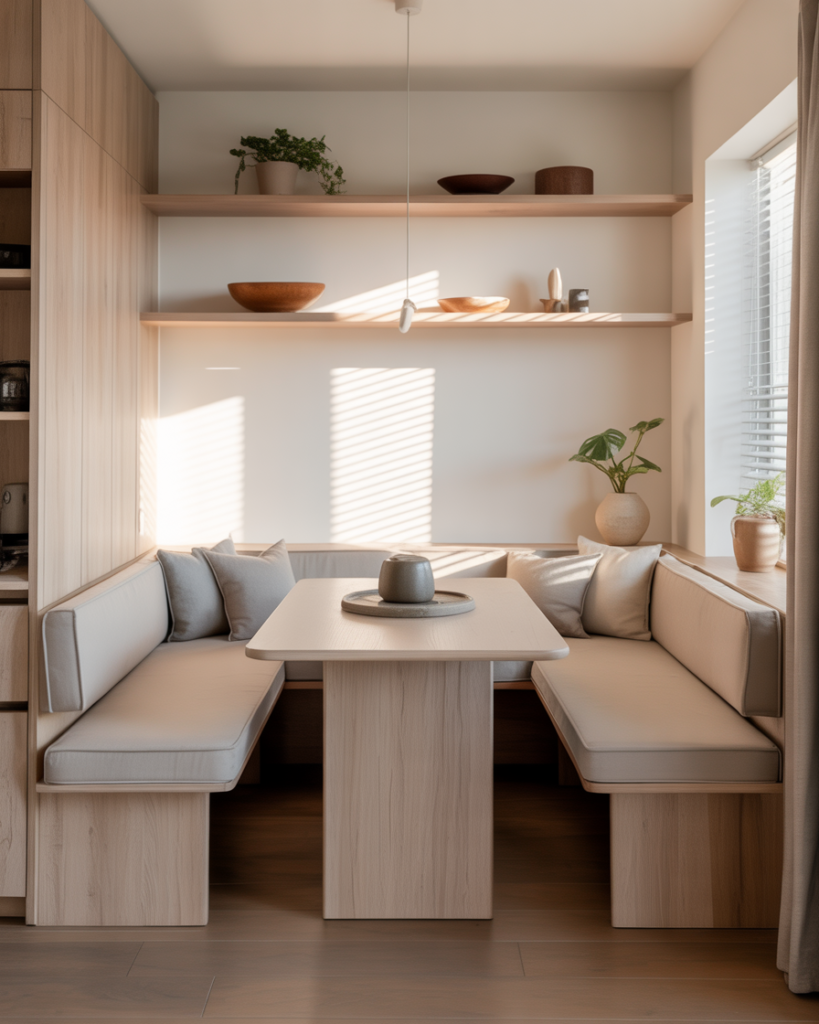
Hidden Storage Dining Areas
Dining areas in small homes are becoming more flexible and discreet. In 2025, hidden storage is the secret weapon for keeping these spaces clutter-free. Benches with built-in storage, expandable tables, and slim cabinetry allow dining areas to adapt to daily life without feeling crowded. You can store table linens, extra dishes, or even work-from-home essentials out of sight. This makes the space feel polished and functional at the same time, which is essential when decorating small spaces without clutter.
Estimated Cost: $900 to $2,800
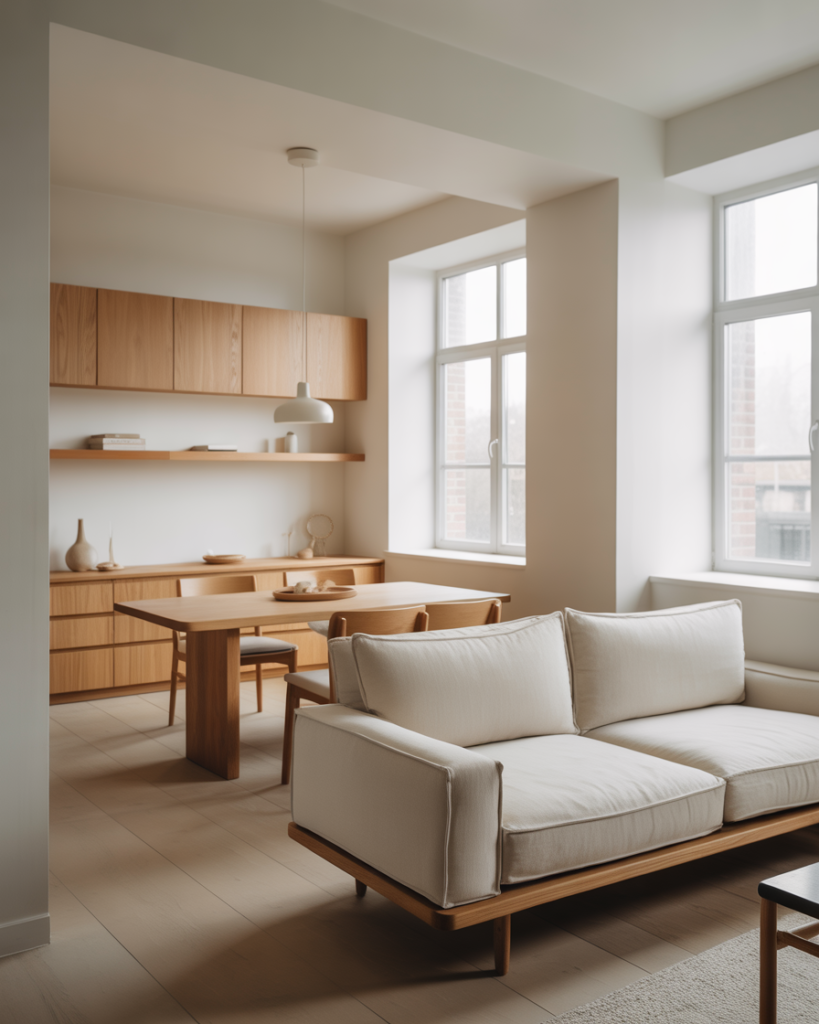
Light Wood and Matte Finishes
Light wood and matte finishes are everywhere in 2025, and they are especially popular in small interiors. These materials reflect light softly and prevent spaces from feeling heavy or closed in. Light oak, maple, and ash pair beautifully with matte finishes on cabinets and furniture, creating a clean and modern look. This trend works well because it adds warmth without visual noise, making it easier to maintain a clutter-free aesthetic while still feeling stylish and current.
Estimated Cost: $700 to $2,200
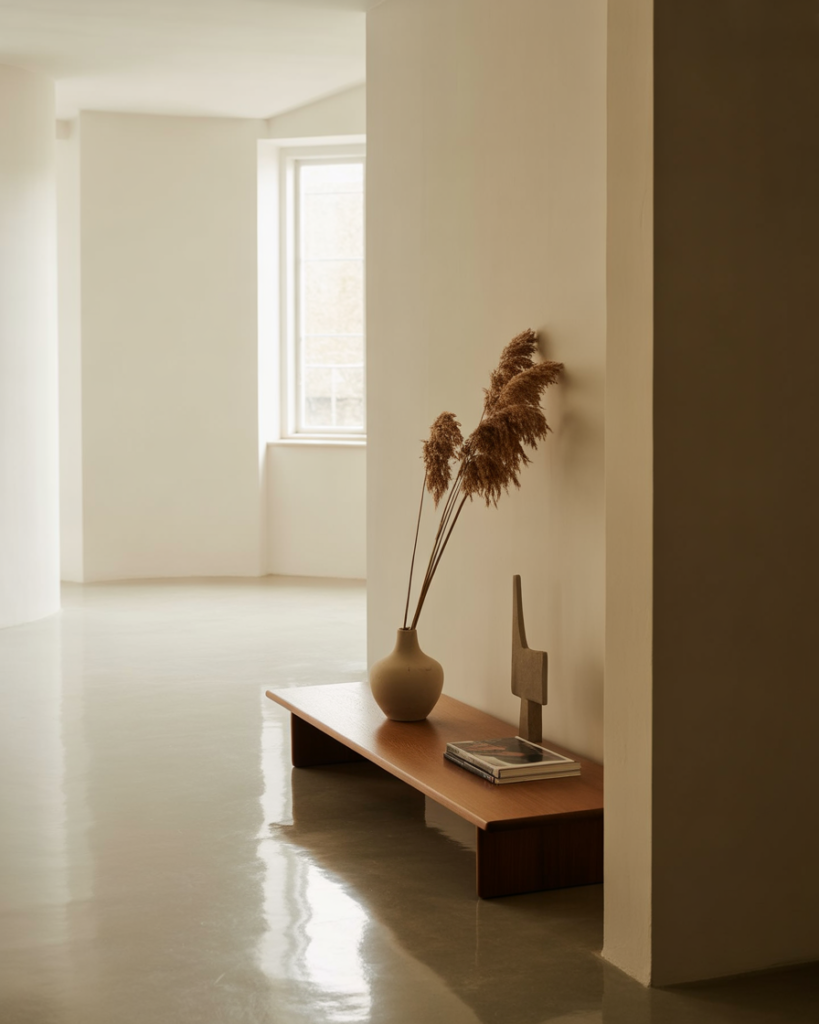
Curated Decor Corners
Instead of spreading decor throughout an entire room, 2025 design focuses on creating intentional decor moments. A curated decor corner might be a single styled shelf, a small reading nook, or one accent wall with carefully chosen pieces. This approach allows personality to shine without overwhelming the space. By limiting decor to specific areas, the rest of the room stays visually calm and functional. It is one of the easiest ways to decorate small spaces without clutter while still making the home feel personal and thoughtfully designed.
Estimated Cost: $200 to $800
Conclusion – Bringing Decorating Small Spaces Without Clutter to Life
Decorating small spaces without clutter is about making intentional choices that support both beauty and function. When you focus on layout, quality pieces, and thoughtful styling, your home feels larger, calmer, and more personal. Start small, edit often, and let your space breathe. If you apply even a few of these strategies, you will feel the difference immediately.
FAQs About Decorating Small Spaces Without Clutter
How do I keep small spaces stylish without overdecorating?
Focus on fewer statement pieces and keep surfaces mostly clear. Let furniture and textures do the visual work.
Is minimalism the only option for small spaces?
No. Decorating small spaces without clutter can still include personality through color, texture, and curated décor.
What colors work best for small clutter-free spaces?
Light neutrals, warm whites, and soft earthy tones create openness and balance.
How often should I declutter small spaces?
Seasonally is ideal. Regular editing prevents buildup and keeps your space intentional.
Can small spaces still feel cozy without clutter?
Absolutely. Soft textiles, warm lighting, and thoughtful layering create comfort without crowding.